
SpeedCash: Play & Earn Money
Leaps GamingEntertainment
4.41.47K Reviews
- Version
- 1.4.2
- Installs
- 100.00K
- Age Rating
- Mature 17+
Screenshots
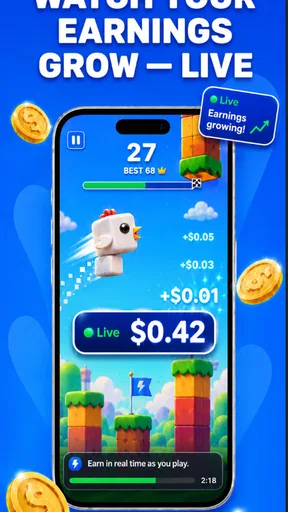
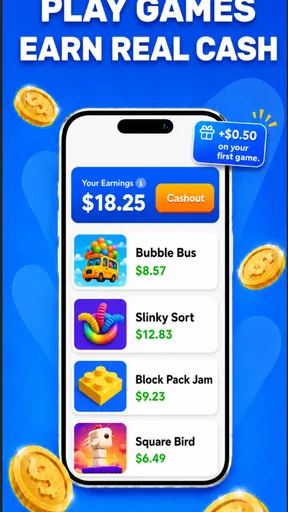
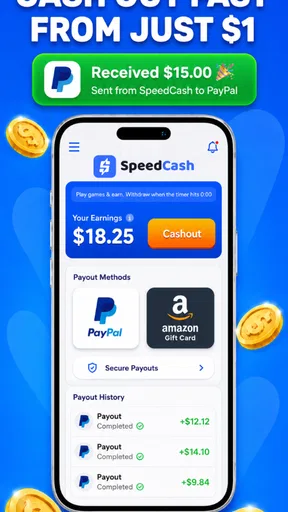
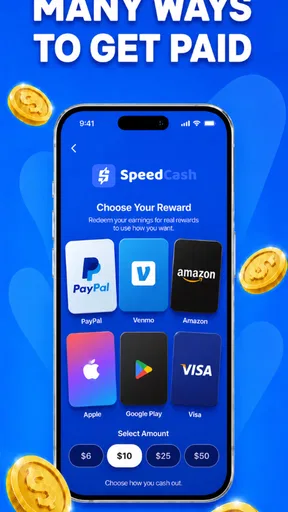
Our Review of SpeedCash: Play & Earn Money
 Analysis by Appyee
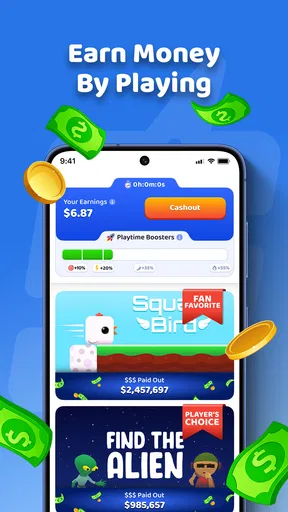
I approached SpeedCash: Play & Earn Money as an entertainment app with one practical question in mind: does it make casual gaming feel more worthwhile, or does the promise of rewards get in the way of simply having fun? My experience is that it sits somewhere between a game-discovery hub and a reward app. It is free to install, aimed at adults, and built around playing selected games while working toward cash or gift-card rewards.
That combination makes it appealing to people who already spend spare minutes on mobile games. It is less convincing for anyone expecting a dependable income stream. The important distinction is that SpeedCash turns gaming time into a possible bonus; it does not turn a phone into a predictable job. I would recommend approaching it with that expectation from the start.
How I Decide Whether SpeedCash Is Worth Using
When I decide whether SpeedCash deserves a regular place on my phone, I look past the first burst of curiosity and ask whether its game-based rewards still feel worthwhile once they become familiar. I also pay attention to the small habits that keep a reward app enjoyable rather than turning it into another obligation. That longer view is what matters when I weigh its lasting value.
The right question is value per minute, not the headline promise
When I judge a reward-based entertainment app, I look beyond the idea of earning. I want to know whether the activity itself is enjoyable, whether progress is easy to understand, and whether the reward goal feels realistic for the amount of attention required. SpeedCash is strongest when the games are already close to what I would choose for a short break. If I dislike the available games, a reward does not automatically make the time feel well spent.
I also consider how much mental effort the app demands. A good casual reward app should be easy to check, easy to leave, and easy to return to without making me remember a complicated routine. That matters in real situations: waiting for an appointment, taking a short break from study, or relaxing after dinner. The less friction between opening the app and starting an activity, the more naturally it fits into daily use.
My other test is expectation management. Reward apps can feel disappointing when users treat every point, milestone, or task as equivalent to cash already in hand. I prefer to view progress as conditional value. The time is spent first, while the benefit comes later and depends on meeting the app’s requirements. That mindset makes the experience more comfortable and prevents me from overvaluing small increments of progress.
Who will get the most from it
SpeedCash makes the most sense for someone who enjoys trying lightweight mobile games and would like a possible extra benefit from that habit. It may also suit users who like variety rather than committing to one large game. The entertainment category is important here: this is not primarily a budgeting tool, a work platform, or a competitive game with a deep single-player campaign.
I can see it working well for a person who already keeps several casual games on a phone. Instead of opening the same familiar title every time, that user can use SpeedCash as a way to discover something different while keeping rewards in mind. The reward element gives a little structure to otherwise disposable screen time, even if the result is modest.
It is a weaker match for people who want guaranteed earnings, instant withdrawals, or a specific type of game. It is also not the choice I would make for a child. The content rating is Mature 17+, so families should treat that age guidance seriously rather than assuming that a game-oriented interface automatically makes the app suitable for younger users.
A realistic everyday session
Imagine that I have twenty minutes before leaving home. I open SpeedCash, choose an available activity, and play until I need to go. The useful part is that the session can remain casual: I am not promising myself a long evening or rearranging my schedule around a reward target. If I enjoy the game, the time feels like entertainment with a possible upside.
The less useful version of the same scenario is opening the app only to chase a reward, then continuing long after the activity has stopped being fun. That is where the trade-off becomes clear. The app can help organize spare time, but it can also encourage me to spend more attention than I intended if I focus too narrowly on reaching the next goal.
What I would check before committing time
I would first look at the current reward path and read its requirements carefully. I would not assume that starting a game alone completes a task, and I would not treat a visible balance as money that can be used immediately. Any reward app deserves this cautious approach, especially when the user is exchanging time and attention for a later benefit.
I would also decide on a personal stopping rule. For example, I might use SpeedCash during short breaks and stop when the break ends, regardless of how close I am to a target. This simple habit protects the entertainment value. It also makes it easier to compare the app honestly with ordinary free games, where the only cost is time and there is no expectation of a payout.
Where the app stands out
The clearest strength is its focused purpose. SpeedCash is made by Leaps Gaming and presents gaming as the central route to rewards, rather than burying that idea inside a general survey or shopping application. For someone who prefers playing to answering questions or completing unrelated offers, that focus is meaningful.
I also like the psychological simplicity of combining discovery and progress. A normal game may give me entertainment but no practical reason to try another title. A general rewards app may offer many task types but feel like a checklist. SpeedCash occupies the middle ground: the activity is game-based, while the reward goal gives me a reason to explore beyond my usual favorites.
Its audience size provides some useful context without turning popularity into proof of quality. The app has passed 100 thousand installs, carries a 4.4 average rating, and has around 6.6 thousand ratings. Those figures suggest that it has attracted a meaningful group of users, but they do not tell me whether every reward experience will feel equally smooth. I still judge it by the clarity of the tasks and by whether the games hold my attention.
Small habits that improve the experience
My first practical tip is to treat each session as a trial rather than a commitment. I would play a newly presented game long enough to decide whether I genuinely like it, instead of assuming that a reward makes it worth continuing indefinitely. This prevents the common mistake of staying with an uninteresting activity simply because progress has already begun.
My second tip is to keep reward chasing separate from personal entertainment. If I want to relax, I choose an activity because it sounds enjoyable. If I want to test SpeedCash, I pay closer attention to the progress conditions. Mixing those two goals can make both feel worse: the game becomes a chore, and the reward becomes the only reason to continue.
A third useful habit is to keep expectations modest when comparing time spent with the outcome. Even without calculating an exact hourly rate, I can ask whether I would have played the game anyway. If the answer is yes, the reward feels like an extra. If the answer is no, I should compare the experience with other ways of spending that same time, including simply using a conventional free game.
Where ordinary alternatives may fit better
SpeedCash is not automatically better than every other entertainment option. A standard free-to-play game may be preferable when I want polished progression, a familiar community, or a carefully designed long-term experience. Those games usually make their central purpose obvious: play for the play itself. I do not need to think about reward conditions while deciding whether I am having fun.
A general rewards app may fit better when I prefer surveys, shopping activities, or other non-gaming tasks. Someone who dislikes mobile games will probably find that category more efficient, even if SpeedCash’s gaming focus sounds attractive at first. The best alternative depends on what I naturally enjoy doing, not on which reward promise sounds largest.
There is also a simple alternative that costs nothing to switch to: use the games I already know. If my priority is relaxation, familiar titles can remove the learning curve and the need to evaluate new activities. SpeedCash earns its place only when the reward layer and the opportunity to try different games add enough value to justify that extra step.
I would choose a different option as well if I needed dependable financial planning. SpeedCash belongs in the entertainment budget of my attention, not in an income forecast. It may help make idle gaming feel more purposeful, but I would not use it to cover bills, replace paid work, or promise a particular amount to someone else.
The cost of changing how I use it
Switching to SpeedCash is easy in the narrow sense because it is free and designed for mobile use. The real cost is behavioral. I need to learn which activities suit me, understand how progress is presented, and decide whether the reward goal is worth continuing toward. That learning time is small, but it still counts when I compare the app with opening a familiar game immediately.
There is also a commitment cost if I become focused on unfinished progress. Once I have invested time in an activity, I may feel pressure to continue even after the entertainment has faded. I find it healthier to regard past play as already spent time, not as a reason to spend more. That approach makes leaving an uninteresting activity much easier.
Another consideration is switching between reward platforms. If I move from a different rewards app, I should not assume that its habits or expectations transfer perfectly. Each service can organize activities and redemption differently. I would begin with a short test, observe how clearly SpeedCash communicates progress, and only then decide whether it deserves a regular place on my phone.
Version, access, and age considerations
The app’s current version is 1.4.2, and it supports devices running Android 7.0 or newer. That makes it accessible to many Android users, including people who do not own a recent phone. Still, compatibility alone does not guarantee an equally comfortable experience on every device, so I would pay attention to how smoothly games open and how easily I can move between the app and the selected activity.
SpeedCash is free, which removes the usual purchase decision at installation. Free does not mean that my time has no value, though. I would still evaluate the app by asking whether the entertainment is enjoyable without the reward and whether the reward process gives me a fair reason to return. That is a more useful test than focusing only on the absence of an upfront price.
The Mature 17+ rating is another practical filter. I would not install it on a young family member’s phone simply because the app involves games. Adults who share devices should also keep the rating in mind before making it available to others in the household.
My recommendation for different kinds of users
For casual players, I think SpeedCash is worth trying with a limited-time experiment. Give it a few short sessions, choose activities that are enjoyable without the reward, and see whether the progress feels understandable. If the app makes ordinary gaming more engaging without taking over your free time, it has found a sensible role.
For serious gamers, my recommendation is more cautious. If you care about deep mechanics, competitive balance, story, or long-term mastery, the reward structure may not compensate for a game that feels less satisfying than your usual choices. You may be happier keeping your main gaming time in a dedicated title and using SpeedCash only when you want variety.
For users seeking money rather than entertainment, I would skip it as a primary solution. The store summary emphasizes cash and gift-card rewards, but I would still view those as a possible benefit of playing, not as guaranteed earnings. A service designed around paid work or a carefully managed budget is a better fit for financial goals.
My overall view is positive but measured. SpeedCash gives gaming a practical twist, and its focused approach is more appealing to me than a reward app built around tasks I would never choose. At the same time, its value depends heavily on enjoying the activities and controlling how much time I give them. The best way to use SpeedCash is as paid-back entertainment, not as a paycheck.
So, would I recommend it to a friend? Yes, if that friend is an adult who already likes casual mobile games and understands that rewards should be treated as a bonus. I would tell them to start slowly, read each goal, set a stopping point, and compare the experience with ordinary games after a few sessions. Used that way, SpeedCash can make spare gaming time feel a little more rewarding without asking me to pretend it is something it is not.
Verdict
Strengths of SpeedCash: Play & Earn Money
- Simple games make it easy to start earning rewards.
- Short play sessions suit users with limited free time.
- Clear reward tracking shows progress toward cash-outs.
- No advanced gaming skills are required to participate.
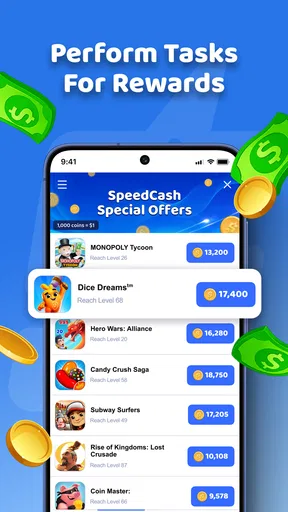
- Offers and tasks provide alternatives to playing games.
Limitations of SpeedCash: Play & Earn Money
- Earnings are typically small compared with the time invested.
- Cash-out eligibility may require reaching a minimum threshold.
- Reward availability can vary by location and user account.
- Some tasks may involve advertisements, surveys, or third-party offers.
- Payout processing may take time and payment methods can be limited.
Similar Picks in This Category
View All
Google Play Games
Google LLC3.9

Netflix
Netflix, Inc.4.8

YouTube Kids
Google LLC4.2

Disney+
Disney4.4

Prime Video
Amazon Mobile LLC4.7

Steam
Valve Corporation3.2
Frequently Asked Questions
What is SpeedCash: Play & Earn Money?
SpeedCash: Play & Earn Money is a rewards app that lets users earn points or cash-equivalent rewards by completing activities such as playing selected games, trying offers, answering surveys, or reaching specific usage goals. The available tasks, reward values, and eligibility requirements can vary by country and account, so users should review each offer carefully before starting it.
How do you earn rewards with SpeedCash?
After creating an account, you typically browse the available offers and choose activities that match your interests. These may include installing a promoted game, completing a survey, watching content, or reaching a stated milestone. To receive credit, follow the offer instructions precisely, use the same device when required, and avoid reinstalling apps or using unsupported tracking tools.
Can SpeedCash rewards really be withdrawn as cash?
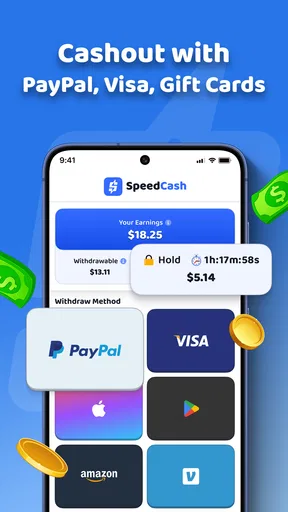
SpeedCash may provide withdrawal options such as gift cards, digital payments, or other supported rewards, but the exact choices depend on your location, account status, and current app policies. Before spending time on an offer, check the minimum payout, processing time, identity requirements, and any restrictions. Reward availability should not be assumed to be identical for every user.
Why might an offer or completed task not be credited?
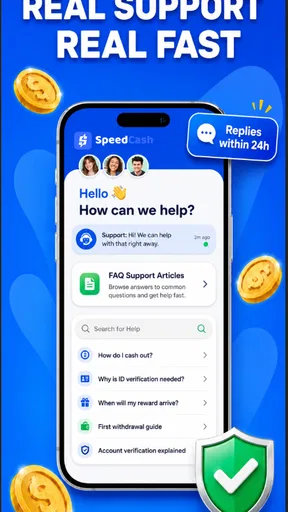
A task may fail to track if the app was previously installed, the offer was opened outside the required link, tracking permissions were disabled, a VPN or ad blocker interfered, or the completion deadline was missed. Some rewards also require verification before appearing. Keep screenshots and completion details, then use the app’s support process if the reward remains pending.
Is SpeedCash safe and worth downloading?
SpeedCash can be useful for users who enjoy trying mobile games, surveys, and promotional offers, but it should be viewed as a small-rewards platform rather than a reliable income source. Download it only from an official store, review permissions and privacy information, and never pay money to unlock withdrawals. Results depend heavily on available offers, tracking, and your location.
